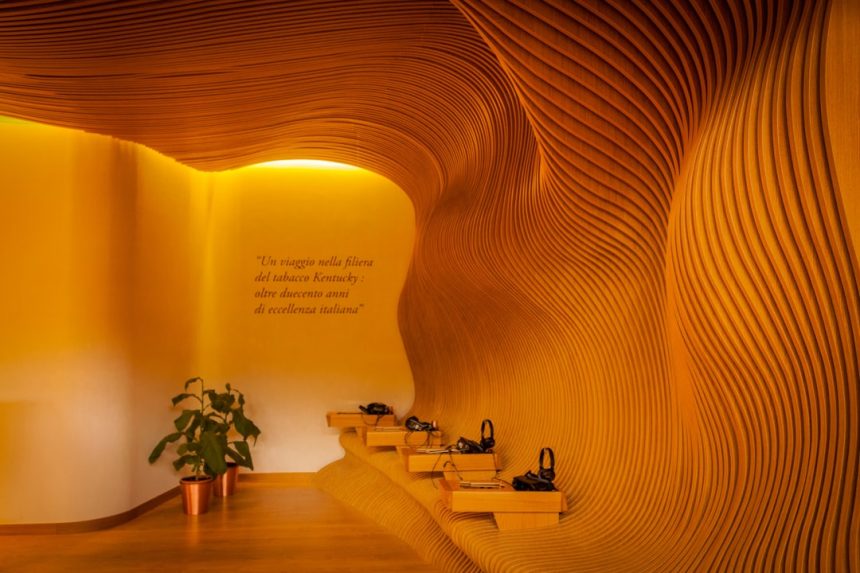
In the evolving landscape of modern thought, where ideas often outgrow traditional definitions and frameworks, a new concept has emerged that seeks to reframe our understanding of human connection, perception, and digital interaction. This concept, known as Aurö, is gaining traction in both academic and technological circles. What is Aurö? Where did it originate, and why is it being discussed as a pivotal shift in how we relate to ourselves and the digital world?
TLDR: A Quick Summary
Aurö is a nascent conceptual framework reinterpretating personal and collective experience through the lens of presence, emotion, and digital interaction. Positioned at the intersection of psychology, design, and technology, it offers a more nuanced perspective of how we engage with environments—both physical and virtual. It’s not an app or philosophy per se, but a layered, evolving idea influencing design theory, emotional intelligence, and online interaction. Understanding Aurö helps clarify how we make meaning in today’s interconnected world.
What is Aurö?
Aurö is best understood not as a product or system, but as a model for interpreting how people inhabit spaces emotionally, cognitively, and socially—especially in an age dominated by technology. The word itself is derived from the Latin root aura, meaning “breeze” or “atmosphere,” indicating its focus on ambient presence and emotional context.
At its core, Aurö seeks to capture and articulate the subtle, often overlooked dimensions of interaction: those whispered impressions that linger in a room, the shared energy in a conversation, or the silent sense of connection forged in a digital encounter. It explains how we can feel genuinely seen in a virtual meeting or disconnected in a room full of people.
The Origins of the Idea
Aurö was first articulated as a working concept by a small group of interdisciplinary researchers in 2020 who were exploring alternative models for immersive digital experience. Tired of the sterile dynamics of user-interface design, they set out to rethink the entire relationship between humans and systems—particularly how these relationships are emotionally and somatically experienced.
Although early traces of Aurö can be found in the writings of phenomenologists like Merleau-Ponty and postmodern thinkers such as Deleuze, its modern incarnation draws from three main disciplinary pillars:
- Philosophy and Phenomenology: Meaning is not just understood cognitively but is embodied and felt.
- Human-Centered Design: Emotions and affective presence are central to product and environment design.
- Digital Ethics and Technology: Interactiveness is now multi-sensory and multi-contextual; technology shapes emotional states.
Key Dimensions of Aurö
Unlike many conceptual frameworks, Aurö doesn’t lend itself easily to a single definition. Its usefulness lies in breaking down experience into layered dimensions that can be observed, mapped, and in some cases, designed for.
1. Ambient Emotional Presence
This refers to the perceived emotional “weather” of a space—physical or digital. It determines whether an environment feels warm or cold, open or closed, without anyone needing to say a word. Designers using Aurö principles consider how lighting, sound, color, and even textual language contribute to this “emotional ambient.”
2. Cognitive Echo
Coined within the Aurö framework, Cognitive Echo describes the sense that what we think or feel is being reciprocated—if not explicitly, then intuitively—by others in the space. Digital platforms often fail in offering real cognitive echo, leaving users feeling unseen or misaligned in the conversation.

3. Somatic Interface Awareness
This calls attention to the physical impact of using digital devices and engaging online. Aurö challenges creators to think how design affects posture, breath, and stress. A well-designed Aurö-based interface might reduce anxiety or promote calm through subtle components like animation speed, font choice, or gesture-based navigation.
Why Aurö Matters in 2024
As remote work becomes commonplace and artificial intelligence increasingly mediates human interaction, there’s a growing hunger for frameworks that do more than enhance productivity—they must foster genuine connection and emotional clarity. This is precisely where Aurö finds resonance.
Call centers redesigning experiences to be more humane, virtual reality developers seeking to better simulate presence, therapists crafting digital tools for anxiety—each of these are modern areas where Aurö is being quietly integrated.
Applying Aurö: Use Cases
To better understand how Aurö operates practically, let’s examine a few settings where its principles have been explored or implemented:
- Therapeutic Environments: A mental health app incorporating Aurö-informed design may open sessions with biometric feedback, changing colors based on emotional state to enhance emotional grounding.
- Digital Learning Spaces: Online classrooms designed with Aurö in mind allow for ambient signals—like visual participation cues—that respond to student engagement, increasing instructor-student rapport.
- Retail Environments: Some forward-thinking retail brands use embedded sensors and ambient music modifications to shape the Aurö of a store based on the collective mood of customers.
Criticism and Limitations
Aurö is not without its critics. Some argue that its subjective nature makes it difficult to scale or measure scientifically. Others caution that embracing emotional-tech design without clear ethics could lead to manipulation or surveillance under the guise of personalization.
Yet, supporters suggest that these challenges are features rather than bugs. “The point of Aurö is not to control emotion,” notes one contributor in a recent conference paper, “but to be conscious of it—to account for the presence of affect as a design layer.”
Future Trajectory
What’s next for Aurö? While it does not have formal institutions or a formal body of research, it is organically growing through:
- Workshops in the UX/UI community
- Graduate-level design courses
- Collaborative AI-human interaction research
- Philosophical discussions about post-anthropocentric tech
Scholars and designers alike are turning to Aurö to ask more nuanced questions about what constitutes ethical and humane technology. As emotionally intelligent systems continue to develop, it’s likely that Aurö will influence guidelines and best practices for a wide range of interactive ecosystems.
Conclusion: More Than a Buzzword
In an age increasingly saturated by artificiality and disconnection, Aurö offers a way to return to—and reimagine—the human element of interaction. It does so not by isolating emotion as an experiment to be quantified but by recognizing it as foundational to any meaningful encounter or design.
For now, Aurö remains a largely interpretive, open-ended framework. But by giving language to previously ineffable aspects of our digital and physical lives, it may just be the lens we’ve needed to better understand ourselves and our technologies.
In the words of one advocate: “Aurö is not a destination. It’s the feeling of arrival.”